Antoine Mœvus

Ph.D. candidate in Computer Science, Université de Montréal (DIRO)
Computer Science Teacher, Collège Ahuntsic

antoine.moevus@umontreal.caGoogle ScholarGitHubORCID

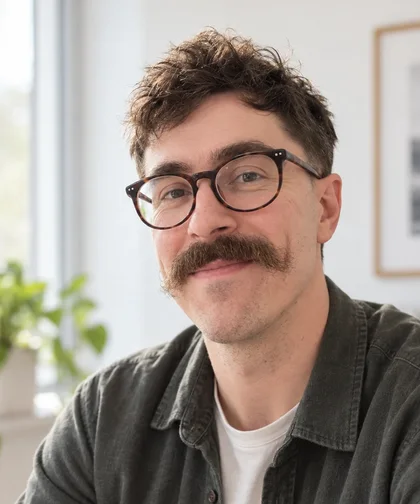
Portrait of Antoine MœvusAntoine Mœvus as an astronaut, humorous image

Create • Comprehend • Enlighten

I work on digital systems for imaging and data visualization, from acquisition to the final image. Also, I teach computer science and software development in higher education.

Research

My research interests span the imaging pipeline, from data acquisition to visualization. I have worked with a wide range of modalities: depth, infrared and RGB cameras, MRI, ultrasound, and interferometric synthetic aperture radar (InSAR).

For processing, I combine scientific computing and machine learning. I pay particular attention to efficient implementation (SIMD, multicore, GPU), on platforms ranging from embedded systems (TinyML) to workstations.

For visualization, I focus on perception and human–computer interaction: perceptual maps for clinical gait analysis, data visualization, and perceptually informed application design.

My doctoral thesis, at Université de Montréal under the supervision of Max Mignotte, addresses phase unwrapping without ground truth.

Interests

  • data visualization
  • human–computer interaction
  • computer vision
  • machine learning
  • scientific computing and hardware-aware optimization

Education

Teaching approach

All teaching →
  • Learning by doing

    Put practice at the heart of the course: doing is what makes us remember, reflect and question.

  • Gaining confidence step by step

    Design every course and lesson as a gradual build-up of skills: knowing a concept, then mastering and deepening it, rather than memorizing it.

  • Encouraging inquiry

    Spark reflection by leading everyone to ask ever deeper, ever clearer questions.

  • Being open, with good judgment

    Welcome new tools and new ideas with curiosity, then adopt them with restraint, keeping a critical eye.

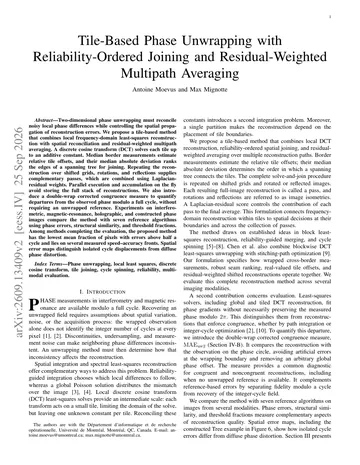
  • First page of the paper on arXiv
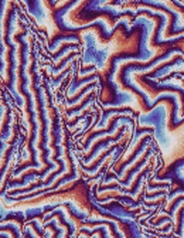
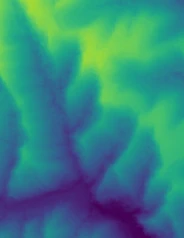
    Wrapped phase of an InSAR imageThe same phase, unwrapped by the 8×8 tile-based method

    Tile-Based Phase Unwrapping with Reliability-Ordered Joining and Residual-Weighted Multipath Averaging.

    A. Moevus, M. Mignotte.

    Preprint, arXiv:2609.13409, 2026.

    arXiv ↗

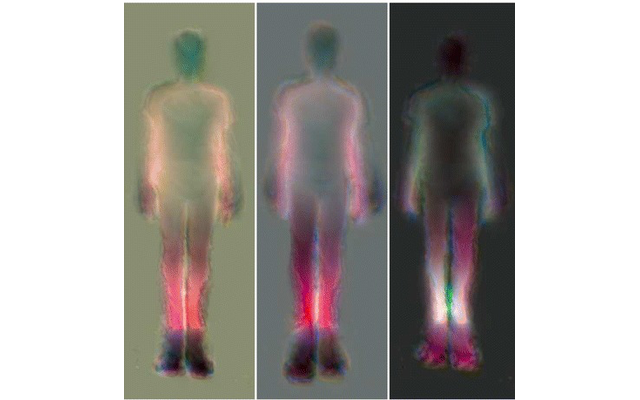
  • Gait asymmetry maps, figure 7 of the paper (CC BY 4.0)

    A perceptual map for gait symmetry quantification and pathology detection.

    A. Moevus, M. Mignotte, J. A. de Guise, J. Meunier.

    BioMedical Engineering OnLine, 14:99, 2015.

    DOI ↗

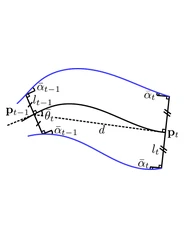
  • Geometric model of a ribbon, figure 2 of the paper
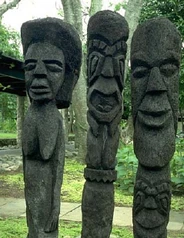
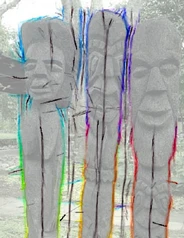
    Photo of totems from the BSDS300 datasetDetected local symmetries (black) and contours (color), overlaid on the photo (figure 7)

    Local symmetry detection in natural images using a particle filtering approach.

    N. Widynski, A. Moevus, M. Mignotte.

    IEEE Transactions on Image Processing, 23(12):5309–5322, 2014. Figures © 2014 IEEE.

    DOI ↗

Industry experience

Full background →

Powertree, Montréal

Vice President, Artificial Intelligence · 2021–2022

  • Led the computer vision and language processing team, reporting directly to the C-suite.
  • Owned the pipelines that recognize and read labels on electrical equipment.
  • Deployed AI models to the cloud for maintenance software for building electrical systems.
Mirametrix, Montréal

Computer vision R&D · 2015–2018

  • Developed a high-performance epipolar geometry library for computer vision.
  • Developed real-time gaze tracking and face detection algorithms in C++ and Python.
  • Ported vision algorithms and neural networks to embedded systems (TinyML) for automotive applications.
  • Designed and built the high-frequency, high-volume data acquisition system for motion capture.

Teaching

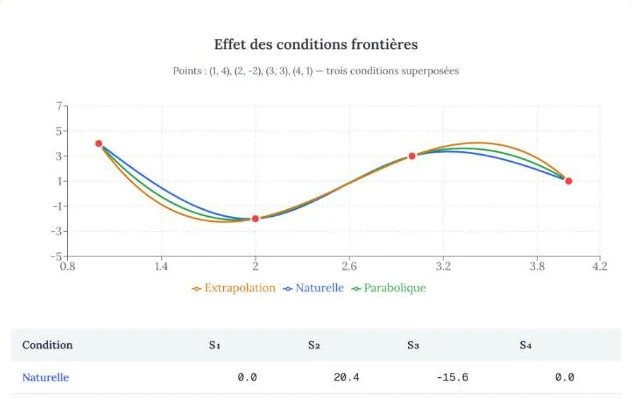
Interactive visualization from the IFT 2425 course: effect of boundary conditions on a cubic spline

IFT 2425 — Introduction to Numerical Algorithms

Lecturer, Université de Montréal · Winter 2026

Public course materials (in French), with interactive visualizations of numerical methods.

View the course →

All teaching →

Contact

For research collaborations or R&D contracts in imaging, computer vision, human-computer interaction, scientific computing or visualization, email me at antoine.moevus@umontreal.ca.

Montréal, Québec, Canada